
Expert ADU Builder In Bend, Oregon.
Ready to build an ADU in Bend, OR, or Deschutes County? Explore the options your property can support and start planning your ideal ADU.
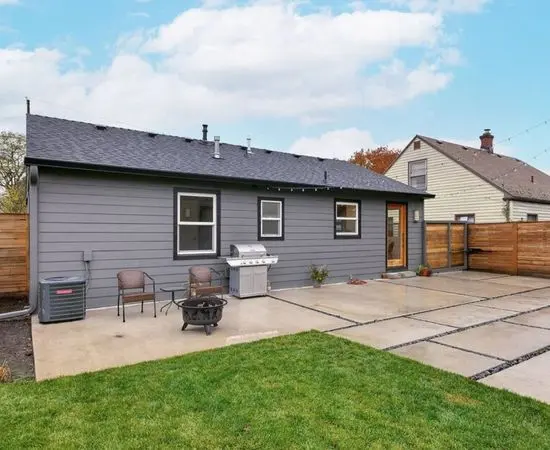
A Full Service ADU Building Contractor in Bend, Oregon.
Add value, versatility, and modern comfort to your property with a custom ADU designed and built by a trusted local team. At Appel Custom Home Remodeling, we’re proud to be among the leading ADU builders in Bend, Oregon—known for our precision, design expertise, and lasting craftsmanship. Whether you’re envisioning a backyard cottage, private guest suite, or income-generating rental, our team guides you from concept to completion with care, transparency, and attention to detail.
As a local design-build company serving Bend and Deschutes County, we understand what it takes to plan, permit, and construct ADUs that meet both your goals and local building codes. From site evaluation to final finishes, we handle every phase in-house—ensuring clear communication, precise scheduling, and results that exceed expectations.
Why Central Oregon Homeowners Choose Us
Fully Licensed, Bonded & Insured
Transparent Pricing
20+ Years Of Experience
High-Quality Craftsmanship
A Locally Owned Company
5-Star Google Rating
ADU Build Styles
No two homes—or homeowners—are the same. That’s why we design every ADU around your property, your needs, and how you plan to use it. Whether it’s space for guests, family, or extra income, our team ensures your new addition feels like a seamless extension of your home.
Our expert team can build a wide range of ADU types, including:
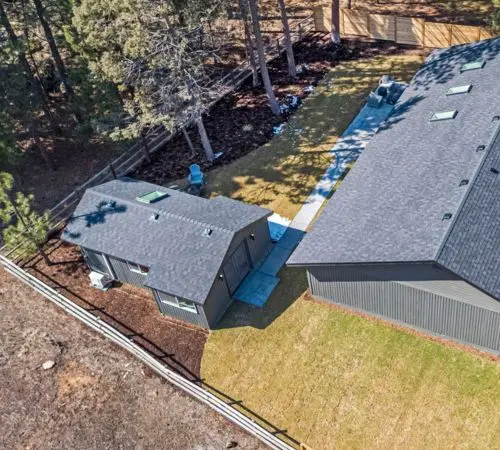
Detached ADUs
Stand-alone structures that add living space, privacy, and potential rental income—designed to complement your existing home’s style and scale.
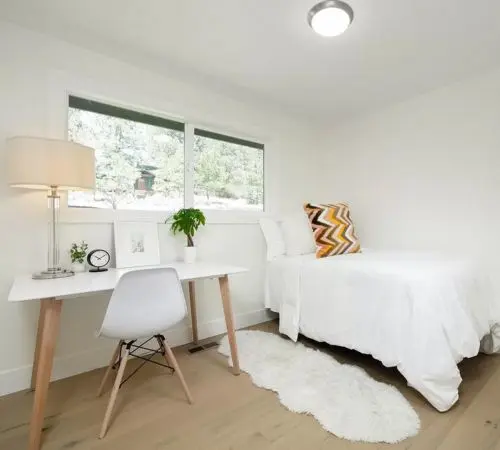
Attached ADUs
Built as an extension of your current home, these additions create a natural flow while maintaining separate living quarters.
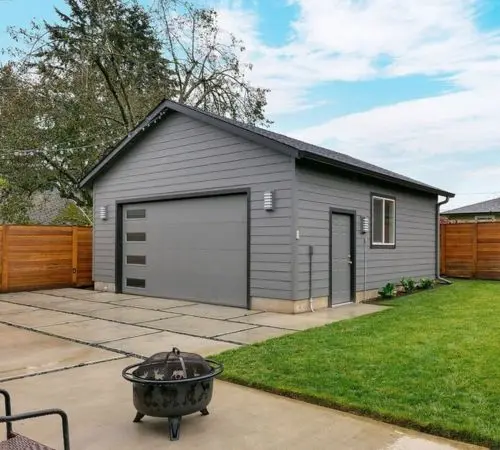
Garage Conversions
Transform an existing garage or outbuilding into a functional living space with custom finishes, insulation, and modern amenities.
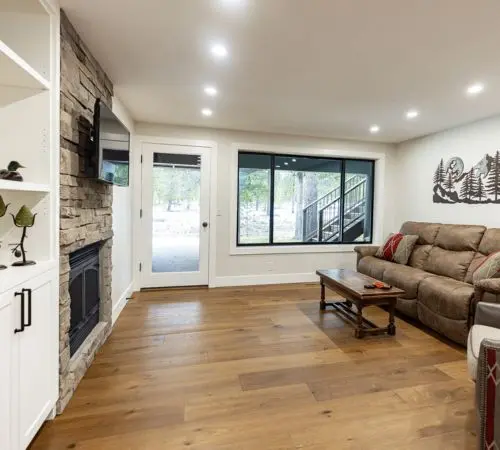
Basement ADUs
Make the most of your existing footprint by converting your basement into a complete secondary living area.
5-Star Google Rating
Talk With a ADU Expert Today!
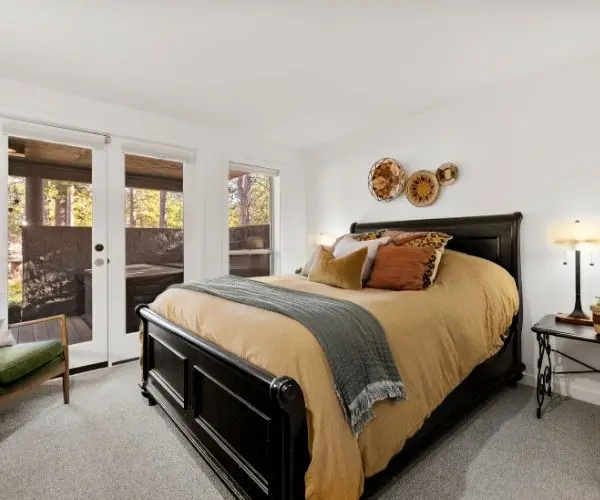
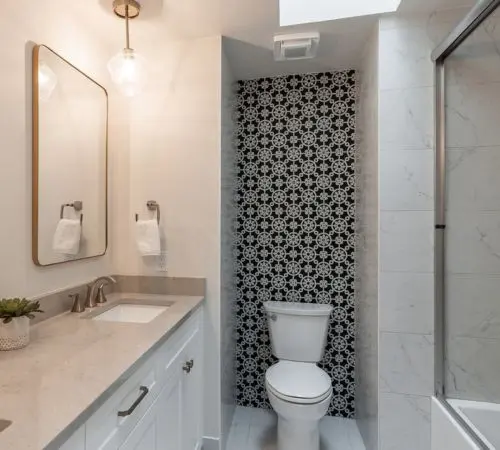
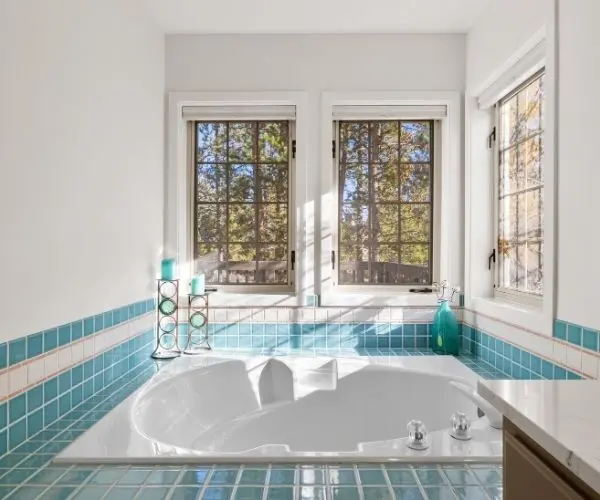
Some Of Our Completed Projects
Our ADU Building Process

1. Initial Contact
We like to begin with a short call to learn about your ADU project and see if we can help. If it’s a match, we’ll set up an on-site visit to explore your ideas and discuss your goals in more detail.

2. On-Site Consultation + Rough Project Estimate
During the consultation, we’ll go in detail what your goals are and what ADU options are available with your property size. Afterward, you’ll receive a rough project estimate to give you a clear sense of the potential budget range.

3. Designing & Final Estimate
If you decide to move forward with the design phase, our team will create a detailed plan for your ADU — including layout options, finishes, and materials. Once finalized, we’ll provide a comprehensive proposal and final estimate so you know exactly what to expect.

4. Contract & Permitting
When you’re ready to move forward, we’ll sign the contract and make everything official. We’ll then handle all permits and required paperwork so your ADU is cleared and ready for construction.

5. Scheduling & Planning
Once permits are approved, we finalize your project schedule and order all materials. You’ll receive a clear timeline outlining each phase of your ADU so you always know what to expect.

6. Construction Phase
With all plans and permits in place, our construction team gets to work. We’ll keep you regularly updated so you’re always in the loop and know exactly how your ADU is progressing.

7. Inspections & Quality Checks
Throughout construction, we coordinate all required city or county inspections, ensuring every phase meets code and quality standards. Before completion, our team performs a final quality check review to make sure your ADU is picture-perfect.

8. Project Completion & Final Walkthrough
Once your project is complete, we’ll schedule a final walkthrough to review every detail together. We’ll address any final touch-ups and make sure you’re completely satisfied before closing out permits and officially completing your ADU.
FAQs
Do I need a permit to build an ADU in Bend or Deschutes County?
Yes, all habitable accessory dwellings require a structural building permit. In Bend, the process is handled through the City of Bend Online Permit Center, while projects outside of city limits fall under Deschutes County Community Development. Because an ADU (Accessory Dwelling Unit) is considered a permanent residence, it must meet the Oregon Residential Specialty Code, which is much stricter than the requirements for a standard storage shed or workshop.
Navigating the local permitting process in Central Oregon can be complex, but our team is well versed in the specific requirements for both the city and the county. If you have questions about the submittal process or want to ensure your plans meet the current state codes, we are happy to discuss the details of your project and help you move forward with confidence.
How much does it typically cost to build a ADU in Central Oregon?
The cost of an ADU in Central Oregon varies greatly based on whether you are converting an existing garage or building a new detached structure. For high-end, design-build projects, detached units generally start around $250,000, covering everything from architectural design to premium interior finishes and utility connections.
The final investment depends heavily on your choice of materials, as luxury cabinetry and high-performance energy systems can raise the price significantly. While basement or garage conversions may cost less, the budget always reflects the complex infrastructure required to ensure the space is fully independent and comfortable in our High Desert climate.
If you are ready to see what your specific property can handle and want a clear picture of the investment required for your vision, we are here to help. Contact us to schedule a free on-site consultation where we can evaluate your property, discuss your design goals, and provide a detailed estimate tailored to your project.
How do I know if my property is zoned for an ADU?
Most residential zones within the Bend city limits now allow for at least one ADU, and recent changes in 2024 and 2025 have even made it possible for some lots to host two units. In rural Deschutes County, ADUs are permitted in specific zones like Rural Residential (RR10) and Multiple Use Agricultural (MUA10) as long as the lot meets minimum size requirements. We recommend checking your specific address through the Bend Interactive Map or the county’s property look-up tool to confirm your zoning and any existing land-use restrictions before starting the design phase.
If you are unsure about the current regulations for your specific property or need help navigating the local zoning maps, our team is available to help you determine exactly what is possible on your lot before you commit to a design.
What is the maximum size allowed for a detached ADU in Bend?
For a standard detached ADU in the City of Bend, the maximum size is typically 800 square feet of living space. However, if you are building an attached unit—such as a basement conversion or a wing added to the main house—the size is limited to either 800 square feet or 50% of the primary home’s total area, whichever is smaller. It is also important to remember that your ADU must fit within the maximum "lot coverage" allowed for your specific zone, which takes into account all structures on your property. Detached ADUs are also limited to a maximum height of 25 feet.
If you are unsure of exactly what your property can handle or what size unit is permitted on your lot, feel free to contact us for a free on-site consultation and estimate. We can go over the specific details of your land and help you see exactly what is possible for your property before you begin the design process.
Can I convert my existing garage into a livable ADU?
Garage conversions are a popular way to add an ADU, but they come with unique challenges. To be legal, the structure must be upgraded to meet modern energy codes, including proper insulation in the walls and floor. You must also ensure the foundation is capable of supporting a habitable space and that all gas, water, and sewer lines are correctly sized for the additional load. In many cases, converting a garage is a more cost-effective way to gain a "carriage house" or guest suite because the primary shell is already standing.
If you are unsure if your existing garage is a good candidate for a conversion or want to know what it would take to bring it up to code, feel free to contact us for a free consultation and estimate. We can go over the details of your structure and see what is possible for your property.
What is the difference between an ADU and a Carriage House?
While the terms are often used interchangeably in casual conversation, a carriage house technically refers to a specific style of ADU located above or attached to a garage. In the context of Bend’s building codes, they are both categorized as Accessory Dwelling Units. Other common names you might hear include "granny flats," "in-law suites," or "backyard cottages," but regardless of the name, they must all follow the same permitting and safety standards to be considered legal dwellings.
Our Main Service Area
Get In Touch:
Open from 8:00 am to 5:00 pm, Weekdays
Email: [email protected]
Phone: (503) 703-3337
We accept Checks and Cash


